
Cooking pork chops to perfection can be a challenge, especially when it comes to knowing the right temperature. Undercooked pork can lead to foodborne illnesses, while overcooked chops can turn dry and tough. Understanding the ideal doneness temperature is essential for both safety and flavor.
The USDA recommends cooking pork chops to an internal temperature of 145°F, followed by a three-minute rest. This ensures juicy, tender meat that’s safe to eat. Whether grilling, baking, or pan-searing, mastering the right temperature will elevate any meal. Let’s dive deeper into the specifics of cooking pork chops and how to achieve that perfect bite every time.
Understanding Pork Chops
Pork chops offer a versatile cut of meat that can enhance various meals. Understanding their types and nutritional value aids in selecting and preparing this protein effectively.
Types of Pork Chops
- Loin Chops: Loin chops come from the back of the pig, offering a tender cut with a small bone. They provide a mild flavor, making them ideal for marinades or seasoning.
- Rib Chops: Rib chops, an extension of loin chops, contain more fat and marbling. This enhances moisture and flavor while cooking, making them suitable for grilling or frying.
- Shoulder Chops: Shoulder chops, cut from the pig’s shoulder, tend to be tougher but flavorful. They benefit from slow cooking methods, such as braising or stewing.
- Butterfly Chops: Butterfly chops are created by slicing a thick chop almost in half. This enables quicker cooking and allows for stuffing if desired.
- Center-Cut Chops: Center-cut chops, taken from the loin, feature an eye of tender meat in the center. Their uniform thickness promotes even cooking.
Nutritional Value of Pork Chops
Pork chops deliver significant nutritional benefits. They typically contain:
| Nutrient | Amount per 100g |
|---|---|
| Protein | 26g |
| Fat | 8g |
| Saturated Fat | 3g |
| Iron | 0.9mg |
| Vitamin B6 | 0.6mg |
| Niacin | 4.5mg |
Pork chops are a rich source of protein, supporting muscle growth and repair. They provide B vitamins that play a critical role in energy metabolism. Iron from pork contributes to blood health, while moderate fat content adds essential fatty acids necessary for overall wellness.
Cooking Pork Chops
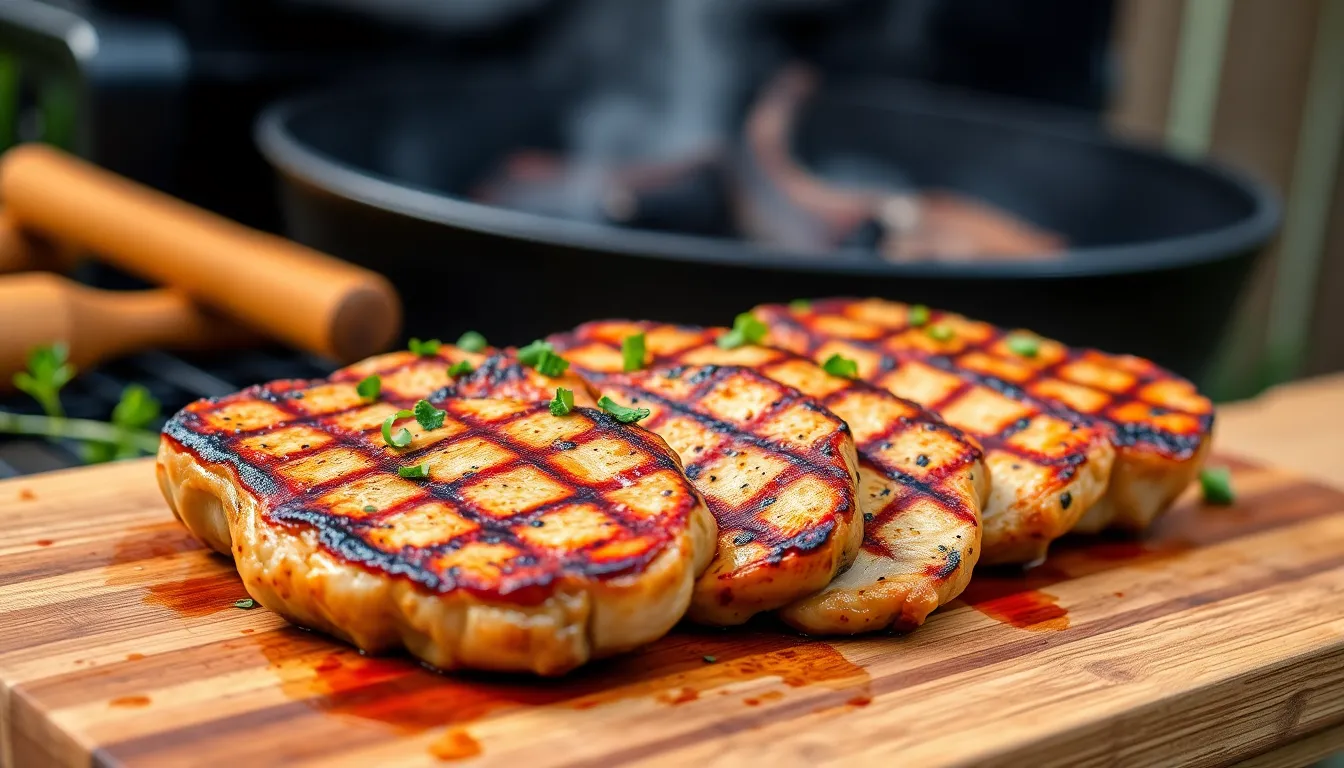
Cooking pork chops involves selecting the right method to achieve the recommended internal temperature of 145°F, ensuring safety and enhancing flavor. Several techniques exist that cater to different preferences and ensures that pork chops remain juicy and tender.
Common Cooking Methods
- Grilling: Grilling pork chops produces a smoky flavor. Preheat the grill to medium-high and cook for 4-5 minutes on each side until they reach the desired temperature.
- Baking: Baking offers even cooking. Preheat the oven to 400°F and bake for 20-25 minutes, depending on thickness. Use a meat thermometer for accuracy.
- Pan-searing: Pan-searing creates a flavorful crust. Heat oil in a skillet over medium-high heat, add pork chops, and cook for 4-6 minutes per side.
- Slow cooking: Slow cooking allows for tenderness. Place seasoned pork chops in a slow cooker with liquid and cook on low for 6-8 hours.
Factors Affecting Cooking Time
- Thickness: Thicker chops take longer to cook than thinner ones. A 1-inch chop typically requires longer cooking time than a ½-inch chop.
- Type of Chop: Different cuts require varying cooking durations. Rib and loin chops generally cook faster than shoulder or thicker cuts.
- Starting Temperature: Chops at room temperature cook more evenly than those taken directly from the refrigerator. Letting chops rest for 20-30 minutes before cooking aids in even cooking.
- Cooking Method: Each method’s heat level and efficiency impact cooking duration. Grilling may cook faster than baking due to direct exposure to heat.
Understanding these methods and factors leads to perfectly cooked pork chops that are both safe and delicious.
What Temperature Are Pork Chops Done?
Cooking pork chops to the correct internal temperature is crucial for safety and quality. The USDA recommends an internal temperature of 145°F for pork chops, ensuring they are both juicy and safe to consume.
Recommended Internal Temperature
Pork chops reach optimal doneness at 145°F, followed by a three-minute resting period. During this resting time, the temperature can rise slightly, enhancing flavor and juiciness. For thin cuts, like butterfly chops, a slightly lower range of 140°F can be acceptable, provided the meat rests.
Importance of Cooking to the Right Temperature
Cooking pork chops to the right temperature prevents foodborne illnesses. Undercooked pork can harbor pathogens such as Trichinella and Salmonella. Ensuring an internal temperature of 145°F helps in killing these harmful bacteria. Additionally, achieving the perfect temperature retains moisture, ensuring the pork remains tender and flavorful, benefiting both health and taste.
Tips for Perfectly Cooked Pork Chops
Achieving perfectly cooked pork chops requires attention to detail in cooking techniques and timing. The following tips ensure optimal flavors and textures.
Using a Meat Thermometer
A meat thermometer provides the most accurate way to check doneness. Insert the thermometer into the thickest part of the chop, avoiding bones, to get a precise reading. Target a temperature of 145°F for safe consumption, allowing for a final temperature of about 150°F post-cooking due to carryover cooking. For thinner cuts, stop at 140°F. Investing in a digital meat thermometer enhances cooking accuracy and reduces the risk of overcooking, ensuring juicy results every time.
Resting Time for Pork Chops
Resting chops after cooking is crucial for moisture retention. Allow pork chops to rest for at least three minutes before slicing. Resting enables the juices to redistribute throughout the meat, enhancing flavor and tenderness. Cover the chops loosely with foil to keep them warm during this period. Adequate resting time maximizes quality, contributing to an enjoyable dining experience.
Achieving the perfect pork chop is all about temperature and technique. By cooking to an internal temperature of 145°F and allowing for a three-minute rest, anyone can enjoy juicy and flavorful pork. Understanding the different types of chops and their unique cooking methods enhances the overall experience.
With the right tools and tips, such as using a meat thermometer and choosing appropriate cooking methods, it’s possible to elevate any meal. The balance of safety and taste is crucial, making it essential to pay attention to these details. Perfectly cooked pork chops can be a delicious and nutritious addition to any table.