
In today’s fast-paced digital landscape, microservices have emerged as a popular architectural choice for building scalable and resilient applications. However, this shift brings unique security challenges that organizations must address. With multiple services communicating over networks, vulnerabilities can easily be exploited if not properly managed.
Microservice security isn’t just an afterthought; it’s a fundamental aspect of modern software development. As businesses increasingly adopt this architecture, understanding how to secure each service becomes crucial. From authentication and authorization to data protection, ensuring robust security measures can safeguard sensitive information and maintain user trust. As the threat landscape evolves, staying informed about best practices in microservice security is essential for any organization aiming to thrive in the digital age.
Understanding Microservice Security
Microservice security encompasses strategies and protocols designed to protect various services within a microservices architecture. This approach addresses unique vulnerabilities and threats inherent in distributed systems.
Definition of Microservices
Microservices refer to a software architectural style that structures an application as a collection of loosely coupled services. Each service performs a specific business function and communicates with others through well-defined APIs. This modular design promotes scalability, flexibility, and easier maintenance.
Importance of Security in Microservices
Security in microservices is essential to mitigate risks associated with the decentralized nature of the architecture. Multiple services increase the attack surface, making critical vulnerabilities more likely.
- Data Protection: Sensitive data transmitted between services requires encryption to prevent unauthorized access.
- Authentication: Each service should verify the identity of users and other services to maintain secure interactions.
- Authorization: Implementing strict access controls ensures that only permitted entities can interact with specific services, reducing the risk of data breaches.
- Monitoring: Continuous monitoring of service interactions aids in identifying and responding to security threats rapidly.
Organizations must adopt robust security practices tailored to microservices to preserve user trust and safeguard sensitive information.
Common Security Challenges in Microservices
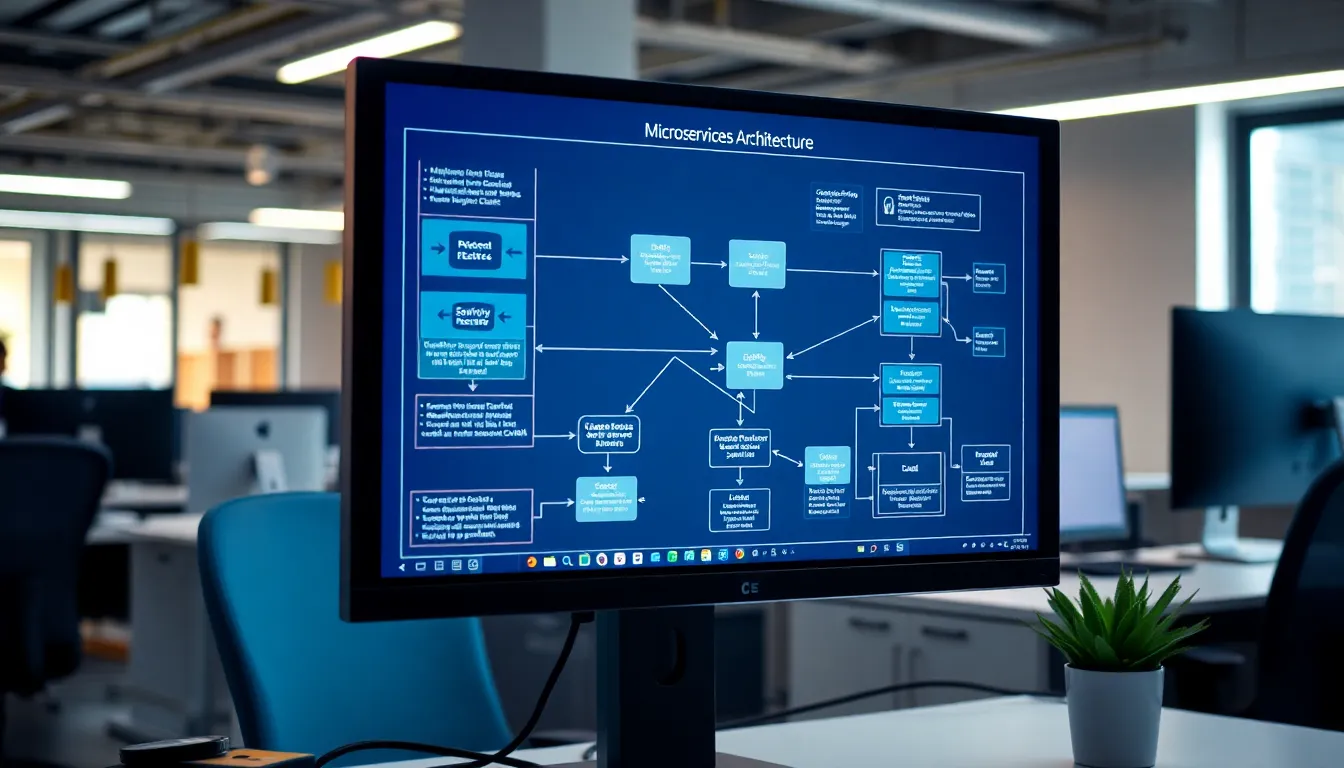
Microservices introduce several security challenges that require robust solutions. Identifying and addressing these issues ensures a secure architecture capable of safeguarding sensitive data.
Authentication and Authorization Issues
Authentication and authorization form the backbone of microservice security. In a microservices architecture, each service often requires independent authentication mechanisms. This independence complicates user identity management and increases the risk of credential theft or misuse. When services communicate through APIs, ensuring that proper authorization checks are in place becomes essential to prevent unauthorized access. Implementation of centralized authentication solutions, like OAuth or OpenID Connect, can streamline identity management and provide enhanced security across all services. Organizations should deploy strict access controls, ensuring users and services have only the permissions necessary for their tasks.
Data Protection Risks
Data protection risks are prevalent in microservices due to the decentralized nature of data storage and transmission. Each service often handles sensitive data, which can expose organizations to vulnerabilities if not protected properly. Without robust encryption methods, data in transit and at rest becomes susceptible to interception or unauthorized access. Employing end-to-end encryption across all communication channels helps mitigate these risks. Additionally, organizations should implement data masking and tokenization techniques to obscure sensitive information. Regular audits and compliance checks act as proactive measures to identify and address potential data security gaps.
Best Practices for Microservice Security
Microservice security requires a multi-faceted approach to effectively mitigate risks. Adopting best practices ensures that each service within an architecture is robustly secured.
Secure API Gateways
Secure API gateways function as the entry point for all communication between microservices. They enforce security policies, enabling functions like authentication and rate limiting. Utilizing API gateways reduces the complexity of managing individual service security. Key measures include:
- Authentication: Enforce token-based authentication mechanisms such as JSON Web Tokens (JWT) to confirm user identities.
- Rate Limiting: Apply limits on API requests to prevent abuse and denial-of-service attacks.
- Input Validation: Implement robust validation checks to filter out malicious input and reduce injection vulnerabilities.
- Logging and Monitoring: Maintain logs of API interactions to monitor for suspicious behavior and facilitate incident response.
Implementing Service Mesh
Service mesh technology provides a dedicated layer for managing service-to-service communications, enhancing security through built-in features. Benefits of service mesh implementation include:
- Traffic Encryption: Automatically encrypt inter-service traffic using protocols like TLS to secure data in transit.
- Access Control: Define fine-grained authorization policies that restrict which services can communicate with one another.
- Service Discovery: Enable dynamic discovery of services, simplifying the management of service interactions while minimizing the risk of exposing unmanaged endpoints.
- Resiliency Features: Use circuit breaking and retries to enhance stability, safeguarding against cascading failures that could be exploited.
Implementing these best practices significantly strengthens microservice security. They create a robust environment where services can securely communicate while minimizing vulnerabilities.
Tools and Technologies for Enhanced Security
Various tools and technologies play a crucial role in strengthening microservice security. These solutions enhance protection against vulnerabilities and streamline security management across distributed systems.
Security Frameworks for Microservices
Security frameworks offer comprehensive guidelines and structures for implementing security measures in microservices. Common frameworks include:
- Spring Security: Integrates easily with Spring-based applications, providing authentication, authorization, and protection against common vulnerabilities.
- Apache Shiro: A powerful and flexible framework that supports various authentication methods and fine-grained access control for Java applications.
- OAuth 2.0: An industry-standard protocol for authorization, enabling secure delegated access to resources without exposing user credentials.
- OpenID Connect: Builds on OAuth 2.0, adds identity verification, and allows applications to authenticate users seamlessly across different services.
These frameworks facilitate secure service interactions by enforcing best practices and standards for identity management, authentication, and access controls.
Monitoring and Logging Solutions
Effective monitoring and logging are vital for identifying security incidents in microservice architectures. Key solutions include:
- ELK Stack (Elasticsearch, Logstash, Kibana): Provides real-time logging, visualization, and search capabilities, enabling efficient analysis and response to security threats.
- Prometheus: An open-source monitoring and alerting toolkit designed for reliability, allowing users to track metrics and set alerts based on specific thresholds.
- Grafana: Visualizes monitoring data with customizable dashboards, making it easier to spot anomalies and respond to security events.
- Splunk: A robust platform for searching, monitoring, and analyzing machine-generated data, offering advanced analytics and machine learning capabilities for security insights.
By utilizing these monitoring and logging solutions, organizations can detect unauthorized activity, track system health, and enhance overall security postures in microservices.
Microservice security is essential for organizations aiming to protect their applications in a complex digital landscape. By implementing robust practices such as centralized authentication and data encryption, businesses can significantly reduce vulnerabilities. The adoption of secure API gateways and service mesh technology further enhances the security posture, allowing for better control and monitoring of service interactions.
Staying updated on the latest security frameworks and tools is crucial in navigating the evolving threat landscape. As microservices continue to gain traction, prioritizing security will not only safeguard sensitive information but also maintain user trust and ensure long-term success.