
Presidential debates have become a cornerstone of American democracy, offering voters a chance to hear candidates’ positions and arguments directly. These debates have evolved over the years, shaping the political landscape and influencing public opinion. But when did this tradition begin, and how has it transformed into the spectacle it is today?
The first televised presidential debate took place in 1960 between John F. Kennedy and Richard Nixon, marking a pivotal moment in political communication. Since then, these debates have grown in frequency and importance, becoming a critical element of election campaigns. Understanding the history and significance of presidential debates provides insight into their impact on voter behavior and election outcomes.
Overview of Presidential Debates
Presidential debates serve as a crucial component of the electoral process in the United States. These events offer a platform for candidates to present their views directly to the electorate. They help voters assess candidates’ policies and personalities, allowing for informed decision-making.
The inaugural televised presidential debate occurred on September 26, 1960, featuring John F. Kennedy and Richard Nixon. This landmark event transformed how candidates communicated with voters. Television’s visual element significantly influenced public perception, marking a pivotal shift in political strategy.
Since then, the frequency of presidential debates has increased. The Commission on Presidential Debates (CPD) organizes debates for general elections, typically scheduling three debates between major candidates. Each debate covers various topics, ensuring comprehensive discussions on relevant issues.
Debates impact election dynamics profoundly. According to studies, nearly 70% of viewers reported changing their opinions after watching a debate. Factors such as presence, response to questions, and ability to connect with the audience play significant roles in a candidate’s performance.
Beyond influencing immediate public opinion, debates contribute to long-term political discourse. They set the stage for voter engagement and help shape campaign narratives. As candidates articulate their visions, debates remain essential in American political culture.
Historical Context
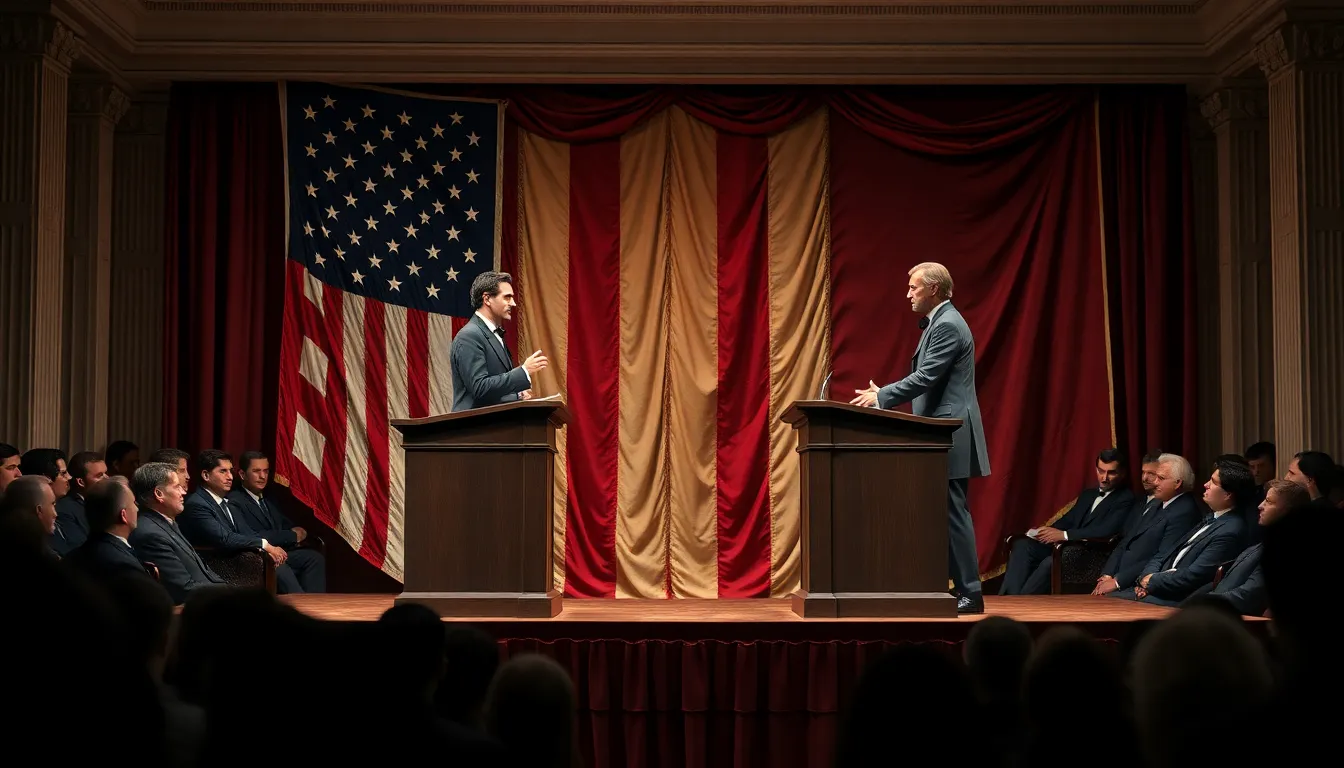
Presidential debates occupy a significant place in the fabric of American politics, evolving through distinct phases since their inception. They serve as a vehicle for candidates to directly communicate their platforms and connect with voters.
Early Presidential Debates
Early presidential debates in the United States were often informal discussions rather than structured events. The first true debate format emerged during the 1858 Illinois Senate race between Abraham Lincoln and Stephen A. Douglas. This series of seven debates set a precedent for engaging discourse. These debates focused on key issues such as slavery and state rights, allowing voters to differentiate candidates based on their beliefs and rhetoric.
Evolution Over Time
The format and frequency of presidential debates underwent significant changes after the 1960 televised debate between John F. Kennedy and Richard Nixon. This event marked the transition to modern debates, combining strategy, media presence, and audience engagement. Since then, presidential debates have become a staple of the electoral process, with the Commission on Presidential Debates regularly organizing three debates for major candidates. Over the decades, these debates have not only increased in visibility but also in their effect on voter perceptions and behavior, shaping the dynamics of electoral campaigns and influencing long-term political conversations.
Key Presidential Debates in History
Presidential debates have played a pivotal role in shaping electoral processes. Several key debates stand out in American history, marking significant shifts in political communication and voter engagement.
The First Televised Debate
The first televised debate occurred on September 26, 1960, between John F. Kennedy and Richard Nixon. This debate reached an audience of approximately 70 million viewers, highlighting the power of television in politics. Analysts noted that Kennedy’s composed demeanor contrasted sharply with Nixon’s anxious appearance, influencing public perception significantly. This debate marked a transformation, setting a precedent for a new era of political campaigns where visual presentation became integral to candidate success.
Memorable Moments and Their Impact
Several debates have generated memorable moments that resonated with voters and shaped election outcomes.
- 1968 Debate: Richard Nixon’s confident performance against Hubert Humphrey emphasized his foreign policy experience.
- 1976 Debate: Gerald Ford’s claim that “there is no Soviet domination of Eastern Europe” raised questions about his foreign policy understanding.
- 1984 Debate: Ronald Reagan’s quippy response to concerns about his age solidified his rapport with voters.
- 2008 Debate: Barack Obama’s calm demeanor amid John McCain’s aggressive style showcased contrasting approaches, influencing undecided voters.
These pivotal moments illustrate how candidates’ performances can sway public opinion, demonstrating the lasting impact debates hold in American political history.
Recent Presidential Debates
Presidential debates continue to play a vital role in elections, reflecting the dynamics of American politics. Recent debates have highlighted key themes and set the stage for future elections.
2020 Presidential Debate Highlights
The 2020 presidential debates featured multiple contentious exchanges between candidates Joe Biden and Donald Trump. The first debate on September 29, 2020, became notable for its chaotic nature, with interruptions and heated exchanges dominating the discussion. Key topics included the COVID-19 pandemic, racial unrest, and the economy. The second debate, held on October 22, utilized a different format with mute buttons to manage interruptions. It focused on critical issues such as healthcare, climate change, and foreign policy. Viewership was high, with over 73 million tuning in for the first debate, underscoring the debates’ significance in influencing voter perceptions.
2024 Presidential Debate Expectations
Anticipation for the 2024 presidential debates has already begun, with candidates from both parties preparing to engage in dialogue about pressing national issues. Expected topics include the economy, immigration, healthcare, and foreign policy challenges. The Commission on Presidential Debates (CPD) will likely provide the framework, organizing multiple debates to ensure comprehensive coverage of candidates’ platforms. Expectations include a focus on the candidates’ ability to connect with voters, along with strategies to address key concerns. The build-up to these debates will shape campaign narratives and voter engagement as the election approaches.
Presidential debates have become an integral part of the electoral landscape in the United States. They not only provide a platform for candidates to express their views but also influence voter perceptions and decisions. As the nation approaches the 2024 elections anticipation grows around how these debates will unfold and the impact they will have on the political climate. The evolution of debate formats and their increasing significance highlight the importance of these events in shaping American democracy. With each election cycle the stakes rise and the role of debates in informing and engaging voters continues to be paramount.